
Deported, Returned, Charged: The Congo Coup and the Americans Who Came Home
The young Utah native Americans who helped launch a coup abroad, and the quiet diplomacy that brought them back
Update – June 2025:
All four defendants—Marcel Malanga, Tyler Thompson Jr., Joseph Moesser, and Benjamin Zalman-Polun—have now been arraigned and pleaded not guilty in U.S. federal court. The case remains in pretrial stages, with proceedings split between the Eastern District of Virginia and the District of Utah. A trial date has not yet been set. Prosecutors are continuing to gather evidence, and discovery motions are ongoing. Defense attorneys are expected to argue that at least two of the defendants were manipulated into participating or had no intent to engage in violence.
In May 2024, a failed coup attempt rocked Kinshasa, the capital of the Democratic Republic of the Congo. Armed men stormed the presidential palace. Shots rang out. A self-declared government-in-waiting called "New Zaire" claimed to have seized power. Within hours, the coup was crushed. But the fallout? It’s still unraveling—and it now stretches from Kinshasa to Salt Lake City to Washington, D.C.
Four Americans were connected to the failed coup. Three traveled to Congo—one was killed during the assault, and two were captured and convicted. The fourth, a Utah man, stayed behind but was charged for allegedly helping plan the operation from the U.S. All were tied to a charismatic, self-declared political leader: Christian Malanga, a Congolese-American who led the plot and died during the attack.
Who Was Christian Malanga?
Born in 1983 in Kinshasa, Zaire (now the DRC), Christian Malanga's life spanned continents, militaries, and political movements. After his mother died, his family fled to Swaziland in 1993 and resettled in Salt Lake City, Utah in 1998 as refugees. There, Malanga attended Highland High School and joined JROTC, sparking a long-standing interest in military service.
He returned to the DRC in 2006 to serve in the army, where he rose to the rank of captain before shifting to business and politics. After founding Malanga Congo, a procurement company, he launched the United Congolese Party (UCP) in the U.S. and declared the formation of a government-in-exile in Brussels in 2017. He named himself President of “New Zaire.”
Malanga had a criminal record in the U.S., including a 2001 assault conviction and other dismissed charges. He also fathered eight children—one of whom would become entangled in the most notorious moment of his political life.
The Coup Attempt
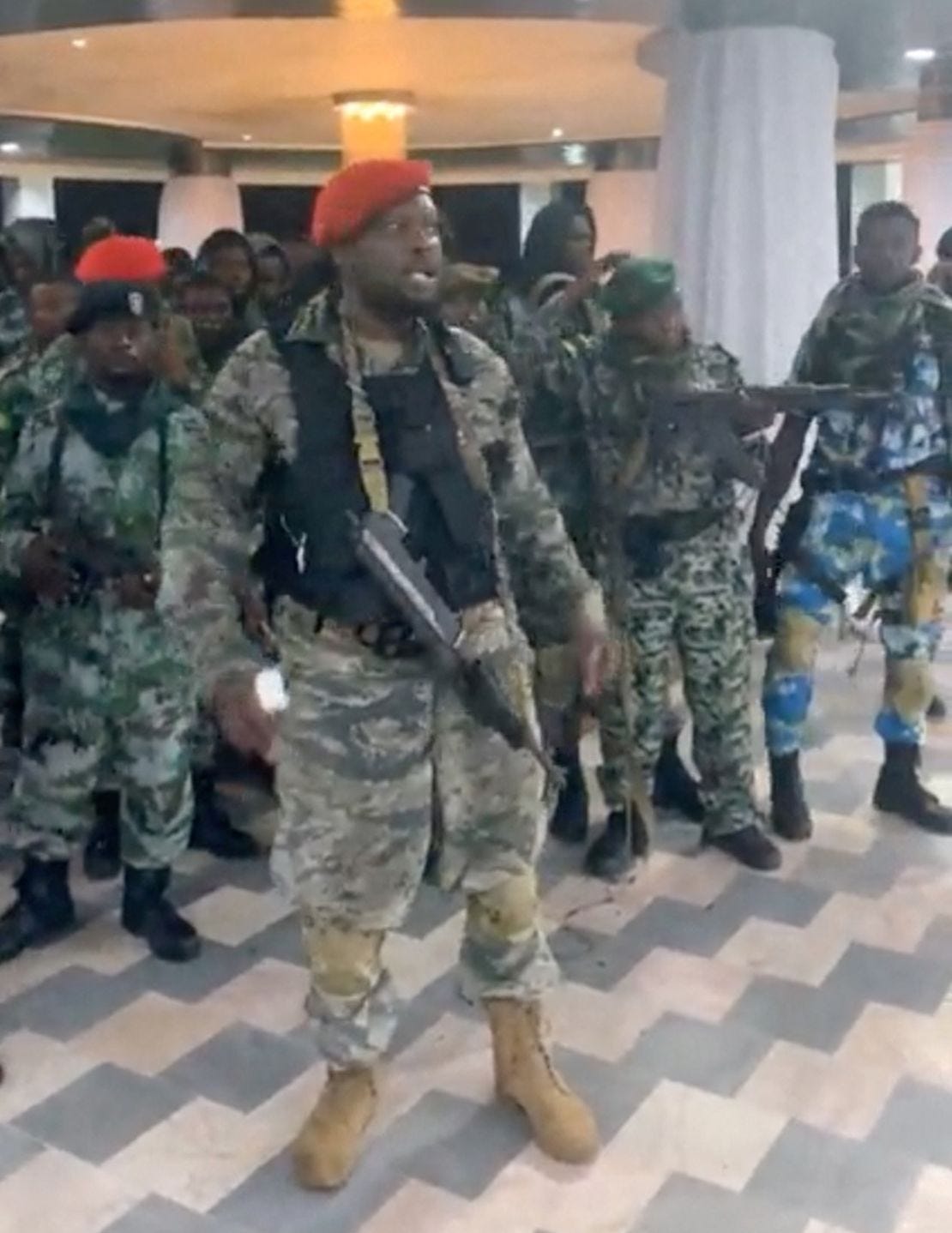
On the morning of May 19, 2024, Christian Malanga led a group of approximately 50 armed men in an assault on the Palais de la Nation, the Congolese presidential palace. Video circulated online showed Malanga inside the building declaring the fall of the government and the rise of "New Zaire."
The group also attacked the residence of Vital Kamerhe, a prominent political figure and former chief of staff to President Félix Tshisekedi. Multiple people were killed in the attack, including Malanga himself, who was reportedly shot during a confrontation with Congolese security forces. Marcel Malanga and Tyler Thompson were captured shortly after the assault.
The attempted coup was brief, ill-coordinated, and ultimately unsuccessful—but it exposed major lapses in DRC intelligence and triggered a severe crackdown.
The Recruits: Utah, Friendship, and Alleged Deceit
His recruits included:
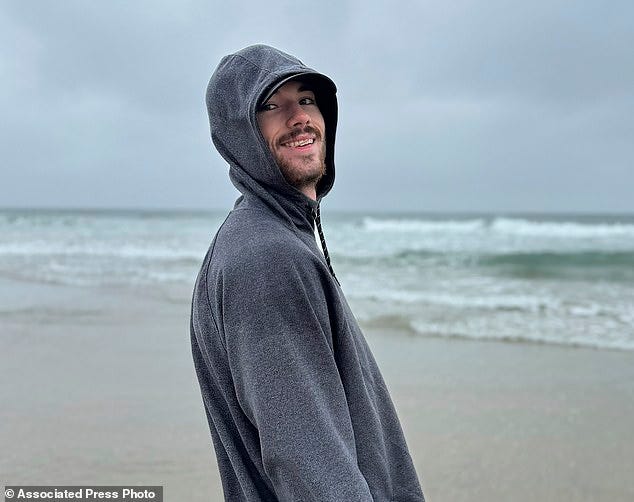
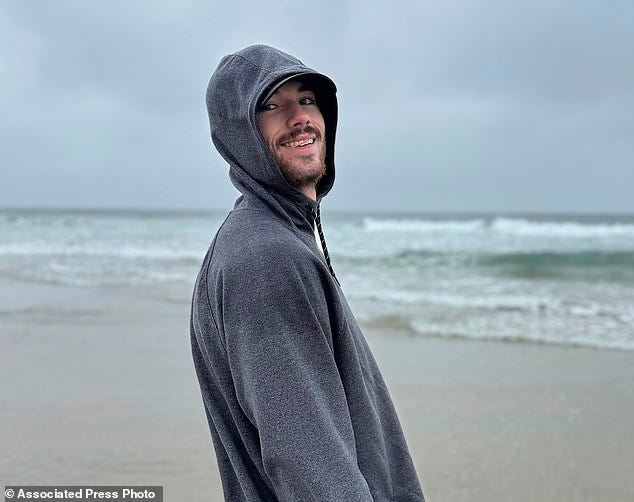
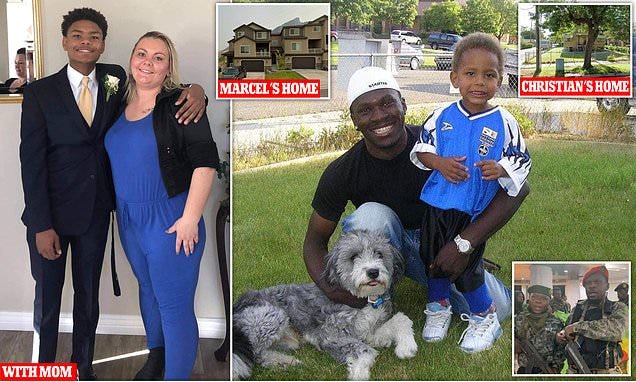
Marcel Malanga, his 21-year-old son from West Jordan, Utah, who reportedly believed he was going on a vacation to Africa to meet family. Marcel later testified that his father coerced him into participating in the coup, threatening to kill him and his friend if they refused. His aunt, Patricia Malanga, supported his account, calling him a victim of his father’s manipulation. Marcel also told a Congolese tribunal that he had been beaten after his capture and had no prior knowledge of the coup plan. (pictured below)
Tyler Thompson Jr., Marcel’s former high school football teammate. Tyler’s family maintains he had no idea what was happening and believed he was headed to South Africa and Eswatini. His mother, Miranda Thompson, publicly pleaded for understanding, saying her son was “duped and terrified,” and only went on the trip because Marcel was his closest friend. (pictured below)
Joseph Peter Moesser, a West Valley City resident and alleged explosives expert who never traveled to the DRC but was charged with aiding the plot.
Benjamin Zalman-Polun, a Maryland businessman with ties to Christian Malanga, also charged.
Arrest and Trial in the DRC
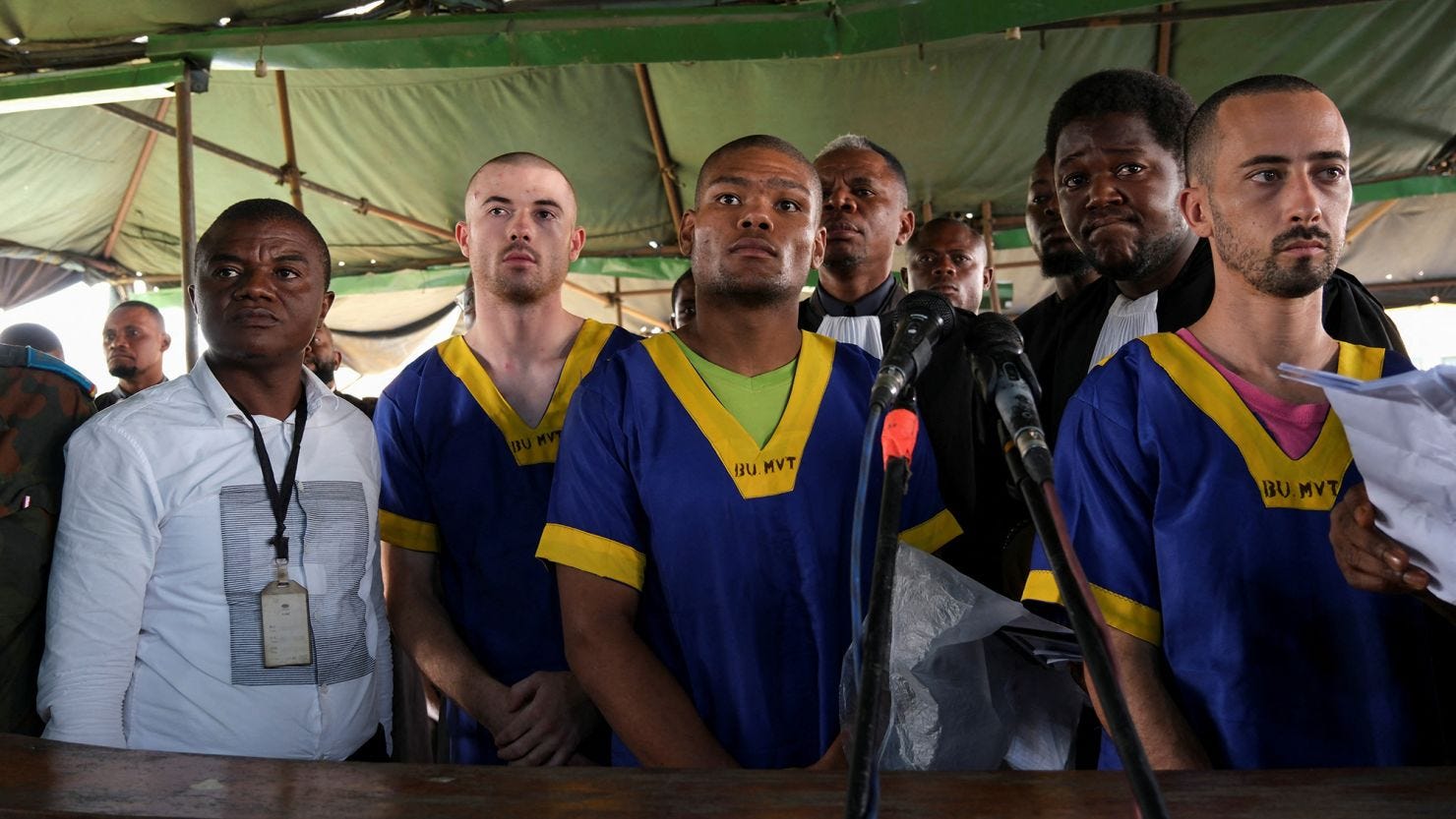
Following the failed coup, Marcel and Tyler were arrested and imprisoned at Ndolo military prison in Kinshasa. Both were among 50 individuals tried in a Congolese military court.
According to the U.S. State Department, Congo’s military courts have a long history of trying civilians, often without proper legal safeguards. Reports include coerced confessions, lack of translators, and even detention for ransom—raising further questions about the legitimacy of the Americans’ convictions.
The trial, which began in July 2024, faced intense scrutiny. The Americans claimed they were denied access to translators, subjected to beatings, and coerced into confessions. They also said they had no legal counsel in the early days of their detention. Despite these issues, the court moved quickly.
In September 2024, the court sentenced Marcel Malanga, Tyler Thompson, and another American to death by execution—a sentence handed down alongside Congolese nationals and other alleged conspirators. International human rights observers criticized the trial as rushed, opaque, and tainted by procedural violations.
The Sudden Repatriation
In April 2025—less than a year later—those death sentences were quietly commuted by Congolese President Félix Tshisekedi, and the Americans were repatriated to the United States. The move came just days after a visit from Massad Boulos, senior adviser to President Trump on African affairs, who traveled to Kinshasa to discuss a potential U.S.-DRC minerals deal.
The timing raised eyebrows—especially because the death sentences were commuted before the visit and the repatriation occurred shortly afterward. No formal agreement or prisoner exchange was announced, and no deal has been confirmed publicly. But the message was clear: some form of quiet diplomacy had worked.
No formal prisoner swap was announced. No diplomatic victory declared. But within a week of their return, the Department of Justice unsealed sweeping federal charges against all three men, plus one additional American who had not traveled to Congo but allegedly supported the plot from U.S. soil.
The Charges
The DOJ charged the men with:
Conspiracy to use weapons of mass destruction outside the U.S.;
Conspiracy to kill or injure persons in a foreign country;
Providing material support to a conspiracy to kill abroad;
Multiple firearms-related offenses;
Violating the rarely used Neutrality Act, which bars U.S. citizens from launching unauthorized military actions against foreign states.
They’ve all pleaded not guilty and are being held in federal detention.
All of these are allegations, and the prosecution has not yet presented its full case. The defense teams, especially for Marcel Malanga and Tyler Thompson, are expected to argue that the two young men were misled or coerced into traveling abroad. Marcel has already testified that he was threatened by his father, while Thompson’s family says he thought he was going on a vacation. We will follow this case closely to hear how their legal defense unfolds and what the court ultimately decides.
What Is the Neutrality Act Violation?
The Neutrality Act, codified at 18 U.S. Code § 960, makes it a federal crime for any U.S. citizen to prepare, finance, or participate in a military expedition or armed attack against a foreign government that is at peace with the United States.
This law was enacted to prevent private individuals from using U.S. soil as a base for launching unauthorized wars abroad.
In this case, federal prosecutors allege that the Americans helped organize an armed coup against the Congolese government—while inside the United States—without any authorization. This included planning, training, and coordinating travel and weapons.
While rarely used, the charge is a powerful signal that the U.S. sees this not just as a criminal conspiracy, but as a violation of international norms and national policy.
What Could They Face if Convicted?
(Sentencing Guidelines Overview)
Conspiracy to use WMDs abroad → Up to life in prison
Conspiracy to kill or injure abroad → Up to life
Material support to a foreign conspiracy → Up to 15 years per count, or life if death occurred
Firearms in furtherance of violent crimes → Mandatory minimums starting at 5 years, up to life
Neutrality Act violation → Up to 3 years
These charges can stack. If convictions are entered on multiple counts, consecutive sentences could push terms well beyond 30 years—or result in life imprisonment.
The Privilege of a Second Trial
This isn’t just a bizarre foreign policy footnote. It’s a mirror—reflecting how uneven U.S. justice can be, especially when it intersects with geopolitics and race.
Thousands of immigrants have been deported without trial, or detained for years without charges, based only on suspicions. Entire families have been torn apart. Asylum seekers have been expelled to countries they barely know—or never lived in.
But here? We’re watching Americans who plotted a coup abroad, received due process overseas, were sentenced to death, and were then welcomed home to face a second, arguably more humane trial.
They got a second chance. And they got it fast.
A Bigger Picture
The case also exposes a broader problem: the ease with which U.S. citizens can plan violent foreign interventions without real scrutiny.
The accused allegedly trained with explosives in Utah.
They coordinated online.
They carried firearms.
They crossed international borders with the intent to overthrow a government.
And yet no red flags triggered federal intervention until after the coup failed. That’s not just an intelligence gap—it’s a national security liability.
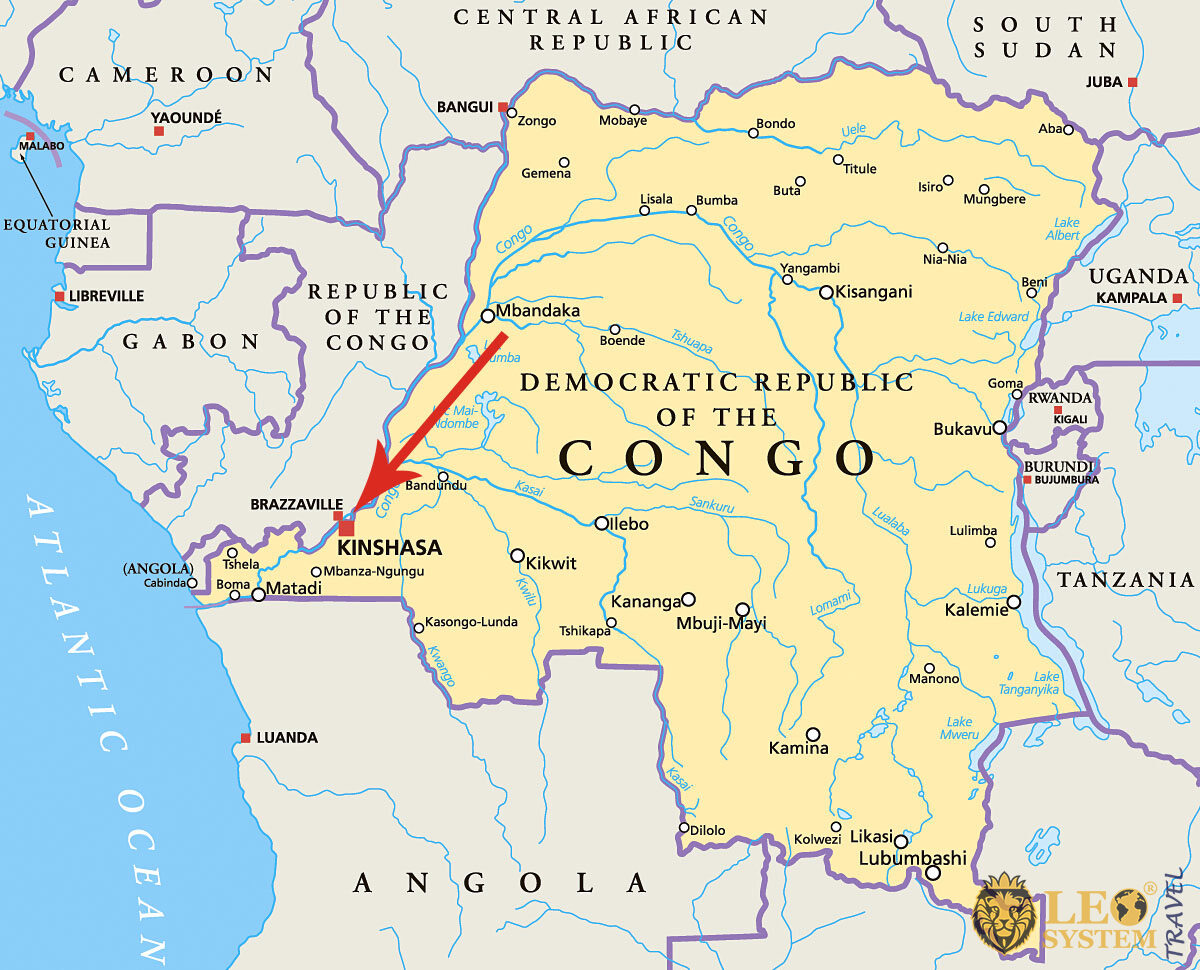
Map: Locations That Mattered
Kinshasa, DRC: Site of the coup and the trial.
Ndolo Military Prison: Where the Americans were detained.
Salt Lake City, Utah: Hometown of Marcel Malanga and Tyler Thompson.
Eastern District of Virginia: Current venue for federal charges in the U.S.
What Comes Next
The trial in the United States will unfold in the coming months, and with it, the opportunity to finally hear a full accounting—from both the prosecution and the defense. What was this really? A reckless act of foreign adventurism? A case of young men misled by a father with a messianic vision? Or something more complex—born of ambition, delusion, and quiet calculations between nations? However it ends, this case has already exposed uncomfortable truths about who the law protects, when diplomacy intervenes, and what the U.S. government chooses to call justice.
Timeline of Key Events
1998: Christian Malanga resettles in Salt Lake City, Utah as a refugee.
2006–2010: Malanga serves in the Congolese military; later launches business and political ventures.
2017: Declares "New Zaire" government-in-exile.
April 2024: Marcel Malanga and Tyler Thompson travel to Africa.
May 19, 2024: Armed coup attempt in Kinshasa. Malanga is killed. Marcel and Tyler are captured.
July 2024: Military trial begins in DRC.
September 2024: Marcel and Tyler sentenced to death by execution.
April 2025: DRC commutes sentences; Americans are repatriated to the U.S.
April 2025: DOJ unseals federal charges in U.S. courts.
Quotes from Trial Observers & Human Rights Advocates
"We are gravely concerned that the Americans did not receive a fair trial in the DRC. The lack of translators and legal counsel is a clear violation of international human rights norms."
— Human Rights Watch, September 2024"This trial raises serious red flags. The proceedings moved forward in a language they couldn’t understand, with a timeline that suggested a predetermined outcome."
— Congo Civil Liberties Coalition"What these young men did or didn’t do must be sorted out by the law—but the process must meet international standards. This one did not."
— International Commission of Jurists
📍Note from the author:
This piece explores the U.S. response to a failed coup in Congo involving American citizens—how they were tried, brought home, and what that says about due process, diplomacy, and justice. I’ve done my best to fact-check every detail, and I’ll continue following the case as it unfolds. If you have insight, feedback, or firsthand knowledge, my inbox is open.


